 English
 Magyar



If you want to register a new web address, it can be difficult to choose the right domain extensions from the many options available. Domain providers now offer more than 1,500 top-level domains (TLDs) for a wide variety of applications. These may represent a country or language, be aimed at specific organisations and institutions, or indicate a particular focus area for a web project. One TLD that has enjoyed popularity for some time now is the .io domain, whose original meaning as a country-code top-level domain plays little part in its success. But what does .io actually mean? And why is this domain extension so popular in IT circles and amongst tech start-ups?
| TLD | Registration | Transfer | Renewal |
|---|
What is a top-level domain (TLD)?
Every address resolved using the Domain Name System (DNS), which forms the basis of the World Wide Web, can be broken down into several components. These individual components always follow a clear, hierarchical structure. The highest, visible hierarchical level is called a top-level domain, or TLD for short. As this level is always located at the far right of the address, it is also referred to as the ‘domain extension’. In the case of the web address www.example.org, for example, ‘org’ denotes the top-level domain.
The allocation of the more than 1,500 available TLDs is regulated by ICANN (Internet Corporation for Assigned Names and Numbers), a division of the non-profit organisation IANA. In principle, a distinction should be made between two different types of domain extensions: generic top-level domains (gTLDs), such as .beauty or .blog, which have a thematic background, and country-code top-level domains (ccTLDs), such as .hu or the .io extension discussed here.
What is a .io domain?
The .io domain extension is a ccTLD, i.e. a country-code top-level domain, assigned to the British Indian Ocean Territory and introduced in 1997. The domain is managed by the Internet Computer Bureau (ICB), a registrar based in the United Kingdom, which has been a subsidiary of the US-based Afilias group since 2017; Afilias also manages the .info, .mobi and .pro TLDs, amongst others.
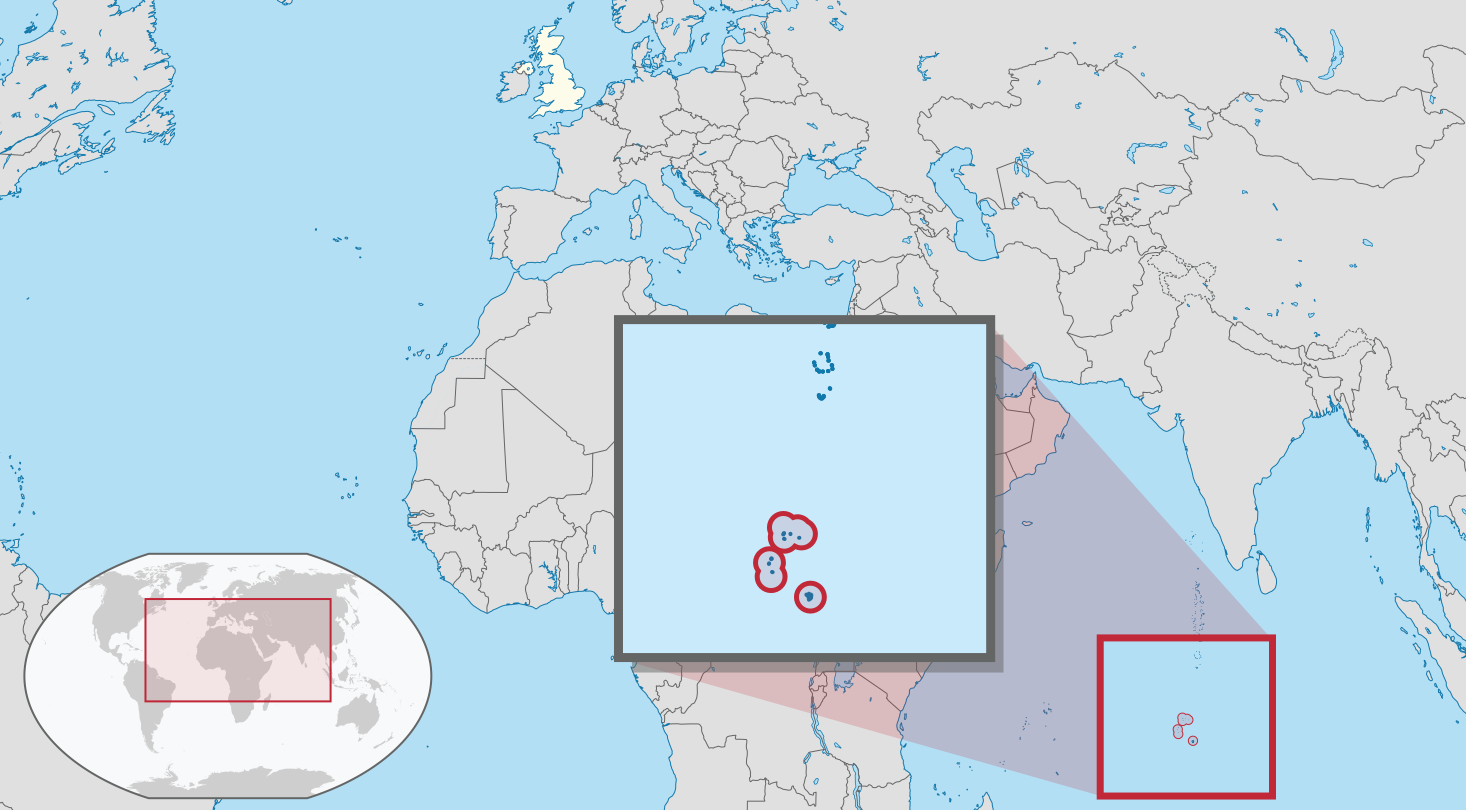
From the outset, the .io domain was not intended to be a country-specific extension – which is hardly surprising, given that there are no legal permanent residents in the British Indian Ocean Territory. Consequently, any individual or legal entity may register a .io address, regardless of place of residence or establishment, and 2–63 alphanumeric characters may be used. Only addresses with second-level domains such as .com, .net or .gov are prohibited. In other words, it is not possible to register a domain such as mybusiness.net.io.
What does .io mean?
Originally, the .io domain was an abbreviation for the Indian Ocean. However, nobody associates this top-level domain with the British overseas territory, the last remnant of which is the Chagos Archipelago (a group of islands covering approximately 40 square kilometres). There is probably hardly anyone who asks themselves the question: “What does .io mean?”, who is even aware that the TLD has a country-specific background.
So rather than asking “What does .io mean?”, the question is really “What meaning is attributed to the .io domain?”. Here, the following two functions of the domain can be highlighted as possible answers:
- Input/output (I/O or IO): In computing, the abbreviation I/O or IO stands for input/output, i.e. the communication between information systems, such as computers, and the outside world. Similarly to, for example, the .app generic TLD, which is the perfect extension for mobile app developers, the .io domain is particularly interesting for technology companies in light of this potential meaning.
- Domain hacks: The .io top-level domain is also significant as a domain hack extension. With a little creativity, a clever combination of the extension and the domain name can be used to create web addresses such as rad.io or portfol.io. A popular example of this is the rub.io domain, which was used by the American politician Marco Rubio during his 2016 presidential election campaign.
Why is the .io domain so popular in the IT sector and amongst tech start-ups?
According to figures published by w3techs.com, approximately 0.5 per cent of all websites are registered under the .io TLD, achieving a similar ranking to country-specific domains such as .it (Italy) or .pl (Poland).
Its great popularity is primarily due to the meaning of the letter combination ‘IO’. Potential users, such as developers or IT system administrators working in the IT sector, can already get a good idea of what the site’s content is about simply from the ‘input/output’ abbreviation present in the domain. Furthermore, the domain extension offers an easily readable and pronounceable alternative to the classic, highly sought-after top-level domains, making it a good choice if a desired name is no longer available under .com etc.
The benefits of the .io domain…
How did a ccTLD that had absolutely no organic users become such a huge success, particularly amongst technology companies? The case of .io is particularly interesting, as a number of factors contributed to the extension’s popularity.
Brand building
First and foremost is brand building. The abbreviation ‘IO’ has been commonly used to refer to input/output since the advent of computers. This is how computers and other information systems communicate with the world. Consequently, the IT sector saw a goldmine in such a widely underutilised TLD.
As a result, the .io domain extension has become something of a symbol for technology companies. What’s more, consumers – even those without any IT knowledge – have quickly learnt that the .io domain extension indicates a technology company.
Over time, this extension has become widely used on gaming and cryptocurrency websites, as many Flash games utilise it for their projects. Consequently, every technology company today is showing great interest in securing a .io domain name before their competitors snap them up.
To make it even more appealing, the .io extension can be very easily incorporated into a domain name, for example examplestud.io or examplerad.io. One of the most famous non-tech users was the US presidential candidate Marco Rubio, who used the domain name rub.io for his 2016 campaign. Today, however, this domain name is available, should you be interested.
Contact details
As you can see, brand building is not the only advantage of this TLD. Compared to other extensions, this one offers its owners a wide range of available domain names. Today, around 44.5 per cent of websites worldwide use the .com extension, whilst only around 0.4 per cent use the .io extension. Naturally, if you wish to secure a particular domain name, there is a high probability that someone already owns the .com version, whilst the .io version is available. Thus, the .io TLD offers business owners an opportunity that once seemed lost: they can choose their brand name based on their research and preferences, rather than on which domain name is available. When the internet became indispensable in 2020, many established brands were forced either to rebrand or to pay huge sums to domain speculators who had bought up their .com names, only to sell them on at a high price. However, this is not unique to the .io extension. Most ccTLDs have a large number of available names. The difference, however, lies in the restrictions.
There are no restrictions
As already mentioned, most ccTLDs have certain restrictions. ccTLD operators introduced these primarily to protect national businesses from traders operating under the .com TLD. The .io ccTLD, however, has no such restrictions. In other words, you do not need to be a business organisation listed in the BIOS (as such organisations do not exist anyway). Anyone can register a .io domain name worldwide without needing to have a local presence on some remote island.
However, please bear in mind that a contract is formed between you and the domain name registrar, so you should read it carefully before proceeding. Nevertheless, the simplicity of registering a domain with the .io extension is undoubtedly one of the main reasons for its current popularity.
Review
As well as the simplicity of registration, another factor is the perception of the .io domain. On an internet full of .com websites, .io stands out. It is easy to remember and helps users distinguish between them. Furthermore, whilst many other extensions are also easy to remember, this extension is considered authentic and reliable. For example, the .tk TLD (a similar case to .io) has often been used by scammers and other undesirable actors. .io, however, is regarded as credible by everyday users. Perhaps this is precisely because many technology companies use it as a brandable extension in their names.
However, a far more important factor is the impression that search engines form of the TLD.
SEO benefits
Google and other search engines often distinguish between ccTLDs and generic TLDs (gTLDs). Generic TLDs are recognised worldwide and can be used by anyone. So, when you search for something on Google, the system takes your geographical location into account and gives priority to gTLDs and ccTLDs from your region. For example, if you search for a keyword in Germany, you’ll get many .com, .net and .org results alongside the .de results. However, it’s very unlikely that you’ll get any .jp (Japan) results, as Google doesn’t really expect you to be searching for a Japanese website. So does this pose a significant problem for a ccTLD that lacks a local user base? Well, no. Precisely because there are no local residents, and internet connectivity is still rare there, Google and other search engines treat the .io extension as a gTLD. More importantly, they treat it as a credible TLD for technology companies. This, of course, represents a significant advantage for any brand, as it allows them to compete for shorter keywords using their domain name. For example, sportsshoes.com has enormous potential to reach the top spot on Google if the right efforts are made (taking their domain name into account). sportsshoes.io, however, has just as good a chance, without having to compete for the name and without having to pay thousands, if not millions, for the domain name. Yet, as the saying goes, one bad apple spoils the whole barrel. So how do .io websites manage to ward off scammers and other malicious actors?
It has a community
As the .io domain has become a goldmine for most fintech and tech companies, these firms are fiercely protective of it. In other words, they do not want malicious actors to undermine their success. As a result, .io users have formed a kind of community. This means that brands can rest relatively assured that the community’s members share a common goal: to ensure that the .io domain name remains safe for users, so that they do not have to switch to another TLD simply because someone is trying to tarnish the name.
Trendy
However, the most important factor behind the popularity of .io is simply that it is currently in vogue. Nothing attracts people more than something that is already well-known and popular. This is very similar to the Kim Kardashian effect. Nobody really knows how she became popular, but she was famous simply because she was famous. So one of the most lucrative aspects of the .io TLD is that everyone is currently talking about it.
…and its disadvantages
Of course, there are also some drawbacks to the .io domain extension.
Higher price
Firstly, this TLD is more expensive than the usual extensions. The annual renewal fee for a .io domain is €58.10 with us, whilst for a .net domain it is €15.60. However, the way the extension fits with brand names definitely makes the higher price worth it.
What’s more, this annual fee is negligible in a tech company’s budget.
Relatively low authority
Another drawback is the issue of comparison. Although users are becoming accustomed to the fact that not all commercial websites use the .com extension, the majority still treat anything that does not end with the well-known three letters with caution. You should therefore expect some initial scepticism, which will inevitably result in the loss of a few customers. Nevertheless, the .io extension is rapidly gaining credibility, and a .io domain name is a wise investment for the future.
Geopolitical challenges

The greatest concerns relate to potential geopolitical issues. Whilst this is still somewhat remote, tensions persist between the United Kingdom, Mauritius and the United States over the Chagos Islands. In the worst-case scenario, this could lead to the dissolution of BIOT and the removal of the .io country code from ISO 3166-1. As a result, the .io ccTLD would simply cease to exist. This is, of course, an extreme and highly unlikely scenario, as ICANN has the final say on this matter. However, it is not unheard of. For example, many British businesses were unable to achieve the renewal of their .eu domain names after Brexit, as they were no longer registered in an EU Member State. So, whilst this is unlikely, it cannot be ruled out and is worth bearing in mind. Despite these minor drawbacks, the .io TLD offers many more direct benefits. It is therefore worth considering registering a domain name with this extension.