 English
 Magyar


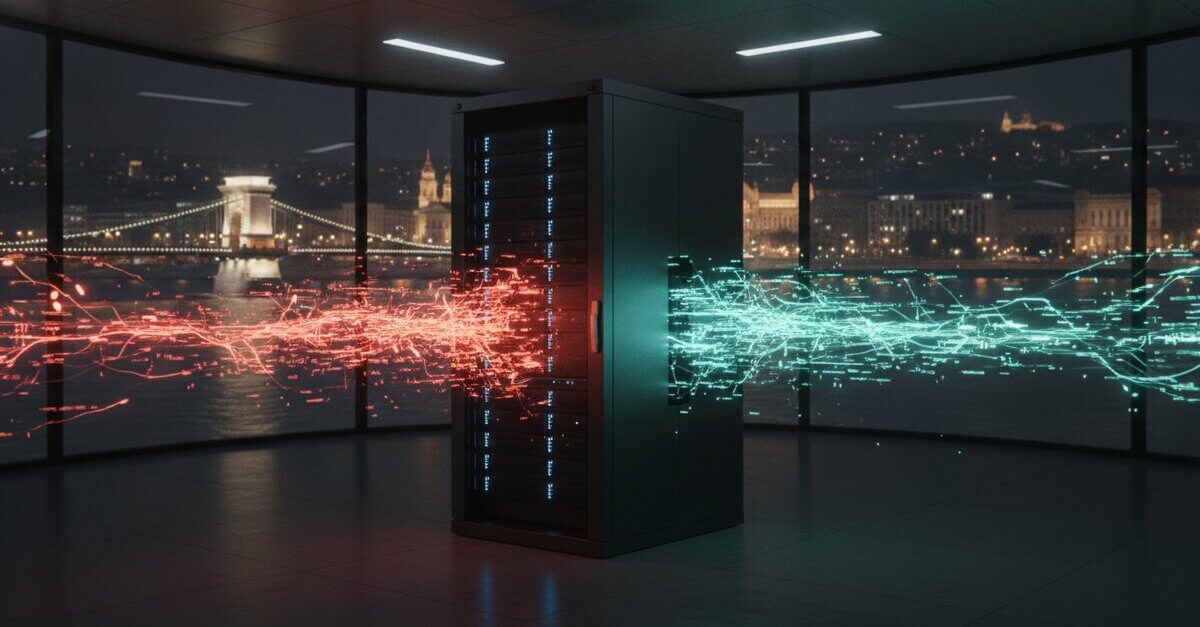
What will happen to your online shop if, at 8 am on 27 November 2026, thousands of customers click on your offers at the same time, but your server simply gives up the ghost? The success of Black Friday depends not on your marketing budget, but on the stability of your infrastructure. A brilliant campaign is pointless if your revenue ends up with the competition because your site crashes or loads too slowly. Effective Black Friday load management is therefore not merely a technical issue, but the cornerstone of profit maximisation.
You’re probably also concerned about customers abandoning their shopping baskets due to slow loading times or uncertainty regarding your current storage capacity. These concerns are well-founded, as whilst the Hungarian e-commerce market continues to grow, shoppers’ patience is wearing thin. This guide will show you exactly how to prepare your website for a surge in traffic, ensuring your system remains stable even under the heaviest load and avoiding unexpected downtime.
We’ll be looking at the benefits of scalable KVM VPS solutions, the speed advantages offered by AMD Epyc processors and NVMe storage, as well as the monitoring options available with cPanel. We’ll also cover critical updates such as the technical implementation of the online cancellation button required under the new consumer protection regulations that came into force in June 2026, which is essential for compliant operation.
Why is managing Black Friday traffic so critical for online shops?
Black Friday in 2026 isn’t just about a single day either. The promotions will kick off as early as 23 November and will build up steadily until the main event on 27 November. During this period, traffic to online shops often swells to ten times the average daily visitor count. This sudden surge places such pressure on the infrastructure that a conventionally configured server rarely withstands it without assistance. Professional Black Friday load management is therefore not an optional extra, but the cornerstone of profit maximisation.
There is a direct, quantifiable correlation between speed and revenue. Industry data confirms that every 100ms delay in page loading can result in a drop in conversion rates of up to 7 per cent. When visitors have to wait several seconds for a product category to appear, they won’t wait patiently. They’ll click away to a competitor’s site. Server downtime, meanwhile, has even more serious consequences. As well as the direct loss of revenue, the brand’s credibility is also damaged, as customers come to associate the shop with unreliability.
Technical stability also affects search engine optimisation. If Google’s web crawlers repeatedly find the site unavailable during peak traffic periods, this will harm the online shop’s ranking. To ensure a stable infrastructure, the efficient distribution of traffic is essential, and this can be achieved most reliably through the use of load balancing technologies. This method helps prevent any single resource from becoming a bottleneck during a traffic surge.
The anatomy of traffic peaks in 2026
Customer habits are constantly evolving. In 2026, we need to be prepared for three critical time slots. The first rush begins at midnight, when the most determined bargain hunters snap up limited-stock items. The second wave arrives around 8.00 am, at the start of the commute and the working day. Finally, the evening period at 8.00 pm will bring the final surge of traffic. As the Hungarian online retail market grew by 15 per cent in 2025, the 2026 rush will require more bandwidth and resources than ever before.
Mobile shoppers now make up the majority of users. These are the people who, whilst on the move, expect an immediate response via mobile internet. If the server is unable to handle large volumes of mobile-optimised requests, user drop-off is guaranteed. The infrastructure must also support new regulatory requirements, such as the online ‘cancel’ button, which has been mandatory since June 2026 and which will further increase the number of requests.
The true cost of slow loading times and downtime
Technical faults trigger a chain reaction. A slow-loading page causes a spike in the number of abandoned shopping baskets, which is immediately reflected in the daily balance sheet. At the same time, the support team comes under an unbearable strain. Enquiries from angry or confused customers paralyse the administration, diverting energy away from sales. The foundation of stability is a properly scalable web hosting solution capable of dynamically adapting to fluctuations in visitor numbers, thereby protecting the business from technical breakdowns.
Server-side preparation: Step-by-step technical optimisation
Keeping your software environment up to date is the foundation of any successful campaign. When managing Black Friday traffic, the first step is to migrate to PHP 8.x versions, as these enable significantly faster execution compared to earlier versions. You can only fully harness the raw power of AMD Epyc processors and NVMe-based storage if the code-side serving is also efficient. Google’s engineers also emphasise how important it is to prepare your e-commerce stack in good time for the expected surge, as even the most powerful hardware cannot always compensate for a lack of software optimisation.
Database optimisation is also a critical issue. Due to unnecessary queries and a lack of indexing, server response times can increase dramatically during peak periods. It is worth reviewing the log of slow queries and optimising the tables that handle the highest volume of traffic. Compressing media files, such as product images, and converting them to WebP format saves on bandwidth, which is essential for a fast mobile experience.
Caching strategies (LSCache, Redis, Memcached)
Caching is one of the most effective methods for reducing CPU load. Along with server-level static content caching, managing dynamic elements is also important. Object caching based on Redis or Memcached drastically speeds up database operations in online shops. If you use a popular content management system, professional WordPress optimisation settings – such as using the LSCache plugin – will help ensure that the server only performs the operations that are truly necessary.
Resource monitoring in cPanel
Real-time monitoring helps prevent problems. You can monitor processes and memory usage via the cPanel interface. Here, you can quickly identify plugins that are consuming too many resources or scripts that are running incorrectly. Managing Black Friday traffic can only be successful if you can see exactly what is happening in the background. That is why, when purchasing cPanel hosting, it is always worth choosing a plan that provides guaranteed resources and transparent monitoring tools.
If your current environment already seems unreliable during testing, it is worth considering switching to a more stable, scalable infrastructure. A well-configured KVM VPS, for example, provides dedicated resources, so traffic from neighbouring websites will not affect the speed of your online shop, even during the busiest sales periods.
Hosting vs. VPS: Which infrastructure can cope with the rush?
When managing Black Friday traffic, the very first strategic decision is choosing the underlying infrastructure. Many people make the mistake of trying to cope with the year’s highest traffic on a traditional shared hosting plan. Although a well-optimised hosting plan can handle a few hundred concurrent visitors, Black Friday presents a far greater challenge. In a shared environment, your website shares CPU and RAM capacity with others. If traffic on another site on the server suddenly spikes, your online shop will also slow down or, in the worst-case scenario, crash.
KVM VPS, on the other hand, offers guaranteed resources. Through virtualisation, the system isolates the processor cores and memory, ensuring they are dedicated exclusively to your online shop. This stability is essential when dozens of transactions are being processed in the database every second. Guaranteed resources ensure that the system’s response time does not increase linearly with the number of visitors, thereby preventing shopping basket abandonment due to slow loading times.
When is the best time to switch to a VPS before Black Friday?
The time to switch comes when daily visitor numbers are consistently rising, or when you expect to exceed the physical limits of your hosting plan during promotional periods. One of the biggest advantages of a KVM VPS is complete control. You can define the software environment yourself. A custom Nginx configuration or setting up the Varnish cache provides a speed boost that cannot be achieved on standard hosting. This flexibility enables the system to dynamically handle even unexpected traffic spikes.
AMD Epyc and NVMe: The power of modern hardware
As well as software optimisation, the quality of the hardware is also crucial. aWh’s infrastructure is built on modern AMD Epyc processors, which deliver outstanding multi-threaded performance. This is essential for the rapid processing of complex PHP scripts and database queries, particularly when the aim is to handle Black Friday traffic. The raw power of the processor directly influences the number of concurrent requests the site can handle without errors.
Another key to speed is the use of NVMe SSD storage. Whilst traditional SSDs are also fast, NVMe technology guarantees significantly higher read and write speeds. This difference really comes into its own during Black Friday. Database operations do not become bogged down, product images load instantly, and the checkout process remains seamless. aWh’s 10+ years of experience guarantees that this technological infrastructure will remain stable even under the most demanding conditions, ensuring your online shop remains a safe haven even during traffic surges.
Stress testing and security: Don’t be caught off guard
Following technical optimisation, the most important step is to test the system’s theoretical limits in practice. When managing Black Friday traffic, we cannot rely on luck or estimates. A thorough stress test highlights those hidden bottlenecks that only become apparent under extreme load. Furthermore, increasing the frequency of backups and strengthening defences is essential, as cybercriminals are also keen to exploit the traffic surge by fishing in troubled waters.
As part of your preparations, it is worth increasing the frequency of backups to several times a day in the week leading up to the campaign and during Black Friday itself. This way, even in the event of a potential error or unexpected database corruption, data loss will be kept to a minimum. Another key aspect of security is DDoS protection and fine-tuning firewall settings so that the server only serves genuine customer requests, whilst blocking malicious traffic at the network edge.
How do we simulate a traffic surge?
To simulate a traffic surge, it is advisable to use professional tools such as k6 or Apache JMeter. With these programs, we can precisely configure the number of virtual visitors and the types of requests, ranging from product searches to adding items to the basket. During the test, particular attention should be paid to response times, CPU utilisation and available memory. If the system returns error messages, it is important to understand whether the disruption is caused by the physical limitations of the hosting service or by software flaws in the online shop’s code.
Cyber security amidst the traffic chaos
High traffic also attracts malicious bots, which unnecessarily drain the server’s resources. Effectively filtering out bot traffic frees up CPU capacity for genuine customers. As well as protection against brute-force attacks, having a valid SSL certificate is essential. An expired certificate or a page flagged as unsafe by browsers results in an immediate loss of trust and mass cart abandonment during the peak hours of the campaign. Managing Black Friday traffic is therefore also a defence strategy.
If you want your online shop to remain stable from both a technical and security perspective, even during peak traffic, choose aWh’s high-performance VPS solutions, which combine guaranteed resources with professional security support.
Summary: The three pillars of a successful Black Friday
Managing Black Friday traffic depends not on a single technical setting, but on a carefully constructed strategy as a whole. Following 15 per cent market growth in 2025, we can expect even higher visitor numbers and a more intense rush of shoppers in 2026, for which server-side preparedness represents the most important competitive advantage. Experience shows that, for a successful campaign, planning must begin at least one month before the main day on 27 November. This timeframe allows us to run thorough stress tests, optimise databases and, if necessary, switch to a more scalable infrastructure.
Software optimisation, such as the use of PHP 8.x versions or professional caching solutions, only delivers the expected stability if it is built on a reliable hardware foundation. Without the multi-threaded performance of AMD Epyc processors and the lightning-fast data handling of NVMe SSDs, software optimisation will quickly reach its physical limits. Continuous monitoring is essential during a campaign. Real-time monitoring via cPanel or other tools ensures that we can react immediately to traffic spikes before they cause slowdowns or downtime. To achieve this, it is essential to have a partner who understands both the technical intricacies of server hosting and the specific, high-load demands of e-commerce.
Last-minute checklist
With just hours to go before launch, the focus shifts from technical modifications to operational readiness. At this stage, it is risky to deploy new features or carry out major code changes. Instead, let’s go through the most important operational checks: verify that the support team channels are accessible, ensure the SSL certificate is valid, and activate scalable reserve capacities. We should also draw up a clear communication plan in case a short-term technical disruption occurs, despite our best efforts. Providing information quickly and transparently helps to maintain customer trust even in difficult situations.
Start getting ready with aWh!
With over a decade of experience and a modern technological infrastructure, aWh supports domestic online shops even during the busiest periods. Our team of experts will help you choose the KVM VPS or dedicated server configuration with guaranteed resources capable of handling the 2026 Black Friday rush. We ensure a fast and seamless migration so that your only task is to break sales records, not deal with server downtime. Don’t wait for the first signs of slowdown – visit our hosting page and lay the technical foundations for your campaign’s success with professional support today!
Prepare your online shop for record-breaking traffic
During the 2026 festive season, technical stability will be the decisive factor between outstanding profits and a painful loss of revenue. Professional Black Friday load management is not just about fine-tuning software, but about the conscious use of a scalable and modern infrastructure. An environment with guaranteed resources ensures that your online shop remains fast and reliable even during the heaviest traffic spikes, preventing customers from abandoning their trolleys due to slow loading times.
The basis of a successful campaign is timely stress testing and an outstanding hardware infrastructure. The raw power of AMD Epyc processors and the lightning-fast data handling of NVMe SSDs provide a technological advantage that allows you to focus solely on sales and the customer experience. With such a stable foundation, your server will serve large numbers of users seamlessly, no matter how high the traffic.
Don’t leave the most important days of the year to chance. Secure the future of your online shop and maximise your revenue with professional technical support. Choose a high-performance VPS server for Black Friday! Start preparing today and be one of the biggest winners of the 2026 season!
Frequently Asked Questions about preparing for Black Friday
When should you start preparing your online shop for Black Friday?
It is advisable to start preparations at least one month before the campaign launches. This period is sufficient to carry out the necessary software updates and run load tests. If it turns out that the current infrastructure is insufficient, there is still plenty of time for a seamless server migration without it affecting daily sales.
Is shared hosting enough if I only have high traffic for a few days?
Shared hosting is a risky choice during peak traffic periods. As resources are shared across multiple websites, campaigns run by neighbouring sites can also slow down your online shop. A KVM VPS, which offers guaranteed resources, is a much safer solution for handling unexpected surges in visitor traffic, as you do not have to share the processor and memory with others.
How does a VPS help with load management?
A VPS provides dedicated CPU and RAM capacity, which is used exclusively to serve your online shop. This isolated environment is essential for managing the heavy traffic associated with Black Friday. KVM virtualisation ensures that the system’s response time remains stable even when the database receives several thousand requests simultaneously, thus preventing the site from freezing.
What is a load test and how do I carry one out?
During the load test, we use software tools such as k6 or JMeter to simulate the expected volume of visitors. This process reveals how many concurrent users the site can handle before it starts returning error messages or crashes. It is advisable to carry out the test with a gradually increasing number of visitors before the campaign goes live, so that we can accurately identify the system’s physical limitations.
What technical settings can I use to speed up my WordPress site?
To speed up WordPress, switch to PHP 8.x and use an efficient caching solution, such as the LSCache plugin. Object caching based on Redis or Memcached drastically reduces the load on the database. Don’t forget to convert your images to WebP format, which saves a significant amount of bandwidth for mobile users, speeding up page load times.
What should I do if my server crashes in the middle of a campaign?
Check error messages and server resource usage immediately via the cPanel interface. If the CPU or RAM has reached its maximum capacity, an immediate resource upgrade may be required. It is in such critical situations that aWh’s 24/7 expert support team proves invaluable, helping to resolve the issue quickly and stabilise the system even during peak traffic.
Does server speed affect the effectiveness of my adverts?
Yes, server speed has a direct impact on advertising costs and conversion rates. Slow loading times lower the Google Ads Quality Score, resulting in higher cost-per-click rates. If a visitor has to wait several seconds for the page to load after clicking, they are highly likely to leave immediately, meaning the advertising budget is wasted and no conversion takes place.
How much does a VPS server optimised for Black Friday cost?
Costs depend on the number of CPU cores selected, the amount of memory and the capacity of the NVMe SSD. To manage Black Friday traffic, it is worth choosing a scalable plan that can be flexibly expanded during peak periods. For exact prices and a quote tailored to your online shop’s needs, please view our current VPS plans on our website, where we offer AMD Epyc-based systems.