 English
 Magyar


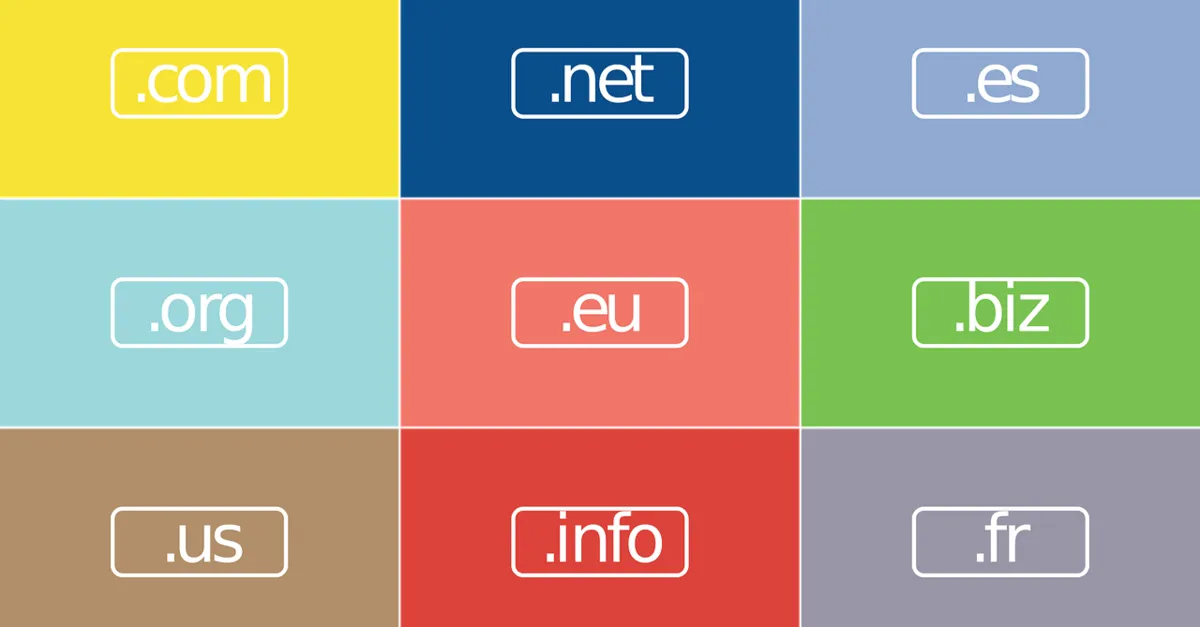
A domain name is what you type into the address bar of your web browser when you want to visit a website, unless you enter the web server’s IP address instead. Domain names can be alphanumeric, which means they can contain letters and numbers, as well as a very limited number of special characters.
Domain names can be seen as a tool that makes it easier for people to visit websites, as in most cases they are easier to remember than their alternative, IP addresses.
Those who wish to set up their own websites can purchase the domain name of their choice from a registrar for a fee, and then proceed to purchase a web hosting service if they do not wish to run their own web server.
Domain names can generally be anything you like, as there is no governing body to say that a particular domain name is not allowed; however, the governing body of the TLD (top-level extensions, e.g. .com) or ccTLD (country-code top-level extension, e.g. .hu) under which you wish to register the domain name may impose specific restrictions on the names that can be used for domains.
A domain is usually used in conjunction with a website hosting plan, so that you can host the relevant website under your account using the domain, rather than just relying on basic tools such as holding pages, which often accompany basic domain registrations.
A web hosting plan is required for hosting both small and large websites, which means that if you purchase a domain with the intention of hosting any type of website, a web hosting plan is a necessary addition.
Most web hosting providers also act as registrars, and vice versa, which is the main reason why many professional web hosting providers offer a free domain with their web hosting plans.
On the other hand, there are companies that are exclusively domain registrars; in most cases, they are able to provide more specialised domain support services than web hosting providers who sell domains but focus solely on their web hosting plans and their customers.
Domain hosting customers are usually given access to a web hosting control panel so that they can manage the web hosting plan they have purchased for their new domain, which they have just registered.
For example, if you choose a Linux domain hosting plan, you’ll probably be given access to the cPanel control panel so that you can easily manage your domain hosting plan.
If you’ve decided to purchase a Windows domain hosting plan, you’ll probably be given access to the Plesk control panel so that you can manage the various aspects of your domain hosting plan.
Hosting control panels – such as cPanel or Plesk – are important for domain owners, as they want to be able to manage various aspects of their web hosting account via a web interface that they can access as and when required.
At the end of the day, a domain is more or less useless if you haven’t created or hosted a website for it, as there won’t be any content to show visitors to the domain.
At the heart of every domain and the internet lies the DNS system, which servers use to determine which servers are responsible for the various services required for the domain to function; the domain’s DNS records are usually maintained by DNS servers.
A domain requires a number of different services to function, such as mail servers, web servers and name/DNS servers; for this reason, most domain providers allow you to use your own name servers and to change these various DNS records as you wish.
It is also important that the registrar allows you to change the domain name servers so that, for example, you can redirect your domain to another company to check out their web hosting services.
Choosing the right domain registration period is an important factor, as you wouldn’t want to register your domain and then forget to renew it at the end of the registration period; therefore, longer domain registration periods are recommended. In some cases, search engines also give higher rankings to domains registered for a long period, i.e. 5–10 years.
Although most domain registrars and web hosting providers now offer ‘automatic’ domain renewal, this process is not always secure unless you purchase your domain from a legitimate registrar or web hosting provider.
If you do not renew your domain at the end of the registration period, you expose yourself to a number of problems. For example, someone may be monitoring your domain name until its expiry date so that they can quickly snap it up when it expires, and the main services associated with the domain will generally cease once it has expired.
Every country has its own domain TLD so that people can purchase domains specific to that country if the website they wish to run is aimed at an audience living in that country. Although there are certain global TLDs, such as .com and .net, there is still a need for regional domain TLDs so that website developers can purchase a domain that corresponds to the location of their website.
Examples of regional TLDs include .hu for domains targeting an audience in Hungary, or .sk for websites targeting visitors living in Slovakia.
The characteristics of region-specific TLD domains can improve search engine results in that country, as search engines recognise that you have used a local TLD for your domain rather than an international one.
However, some websites use TLDs as part of their domain name to make them unique; for example, the Delicious website uses the ‘.us’ TLD, with ‘icio.us’ as the main domain name and ‘del’ as a subdomain of the actual domain.
In summary, a domain is needed so that a website can be accessed without having to assign an IP address to every single website on the internet.
Whilst you need to ensure that you can keep track of your own domain, it can also be used as an effective marketing tool if you choose a domain with a region-specific TLD, as it will achieve a higher ranking in local search engine results.
A domain provides visitors to your website with an easy-to-remember alphanumeric address, which they can use to access your website at any time. Even if you do not choose a web hosting plan that includes hosting for your website, your domain registrar or domain provider will still provide tools that allow you to transfer your domain’s hosting to another provider.