 English
 Magyar


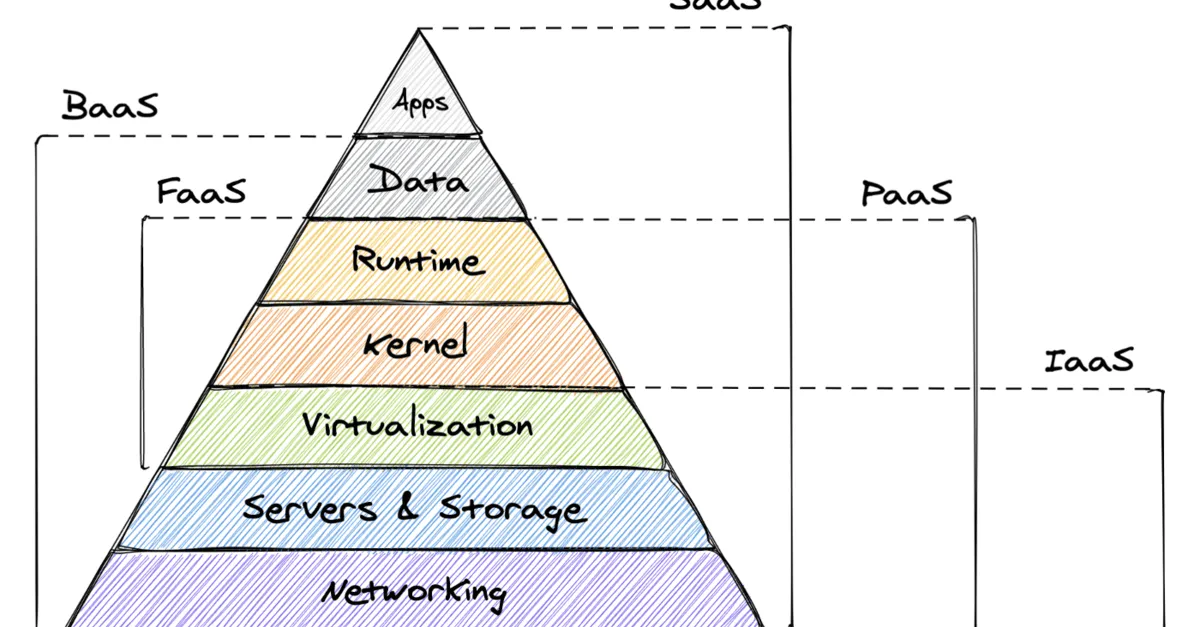
Infrastructure as a Service (IaaS), Platform as a Service (PaaS) and Software as a Service (SaaS) are three different types of cloud service. To help you understand their similarities and differences, in this post we’ll look at what they are and what they’re used for.
What are IaaS, PaaS and SaaS?
IaaS, PaaS and SaaS are three different types of cloud service that businesses can purchase from a cloud service provider. One of the most commonly used types of cloud is IaaS, a service that enables companies to rent cloud-based infrastructure – such as storage, servers and networking – to store data and run applications. IaaS is a managed service.
PaaS is a more specialised service that companies and developers can use to create, deploy and host new applications. As this takes place in the cloud, most companies use PaaS to develop applications for their customers. The service encompasses both the cloud infrastructure (as with IaaS) and the development platform.
SaaS is the most commonly used cloud service, whereby software companies offer cloud-based software solutions to customers. Services sold on a subscription basis can be purchased directly from the software manufacturer or licensed through a cloud service provider. Examples of such services include Office 365, Salesforce and Zendesk.
What is IaaS used for?
IaaS enables companies to set up their own infrastructure without having to purchase hardware, build a data centre or take on the management of the physical environment. Instead, everything is hosted on the provider’s infrastructure, and they manage the hardware, whilst the company can access and manage its system online. In this sense, IaaS can offer significant financial savings compared with in-house systems.
IaaS offers significant benefits for businesses. As well as avoiding the need for major investment in hardware, the cloud’s ‘pay-as-you-go’ pricing structure means that companies only pay for the IT resources they actually use. When combined with the ability to scale resources up or down instantly as required, this allows organisations to exercise greater control over their expenditure, whilst being confident that if they need more resources, they can obtain them at the click of a mouse.
Further benefits include faster backups and restores through the use of cloud-based backups and disaster recovery (DR) solutions, 24/7 technical support, and, where required, access to bespoke managed service solutions.
What is PaaS used for?
PaaS is a solution that offers companies a framework with which they can develop their own cloud-based applications without having to set up or manage their own infrastructure. Once developed, the company naturally has access to infrastructure that is ideally configured to run the application in question, as well as additional, scalable resources to enable it to meet increased demand.
PaaS platforms are secure, ideal for collaborative development, and enable developers to access an ever-growing number of web-based PaaS tools. As applications are built from scratch in a cloud environment, companies do not have to face the challenges that can arise during in-house development and subsequent migration to the cloud – which can dramatically speed up the final deployment. Furthermore, all the cost-efficiency benefits associated with IaaS apply equally to PaaS.
What is SaaS used for?
SaaS provides cloud-based software for businesses which – as it is hosted online by the provider – is accessible via the internet. This is ideal for remote working and collaboration, and also means that data and software do not need to be downloaded and installed onto individual devices (although users can often do both). This can minimise the risk of data loss, improve data management and reduce the workload on IT staff, who, in the case of a non-SaaS solution, would have to deal with licensing, installing, updating and patching individual versions of applications on each machine. It also places a lighter burden on companies’ own IT operations, as processing and data storage take place on the provider’s infrastructure.
SaaS products are easy to set up, use and manage, whilst being highly scalable. As a company grows, it can simply upgrade to a larger plan, and new users can access the service easily. Furthermore, if an employee leaves, their access can be revoked just as easily. What’s more, SaaS products are automatically patched and updated by the provider, thereby reducing the likelihood of vulnerabilities arising.
The only potential drawback of SaaS is that the customer is dependent on the provider to keep the software online. Although such incidents are extremely rare, if the service does go down, the company cannot do much until the provider is able to restore the service.
We hope that, having read this post, you now understand what IaaS, PaaS and SaaS are, what they are used for and why companies use them, and, building on this, you are aware of the similarities and differences between them.