 English
 Magyar


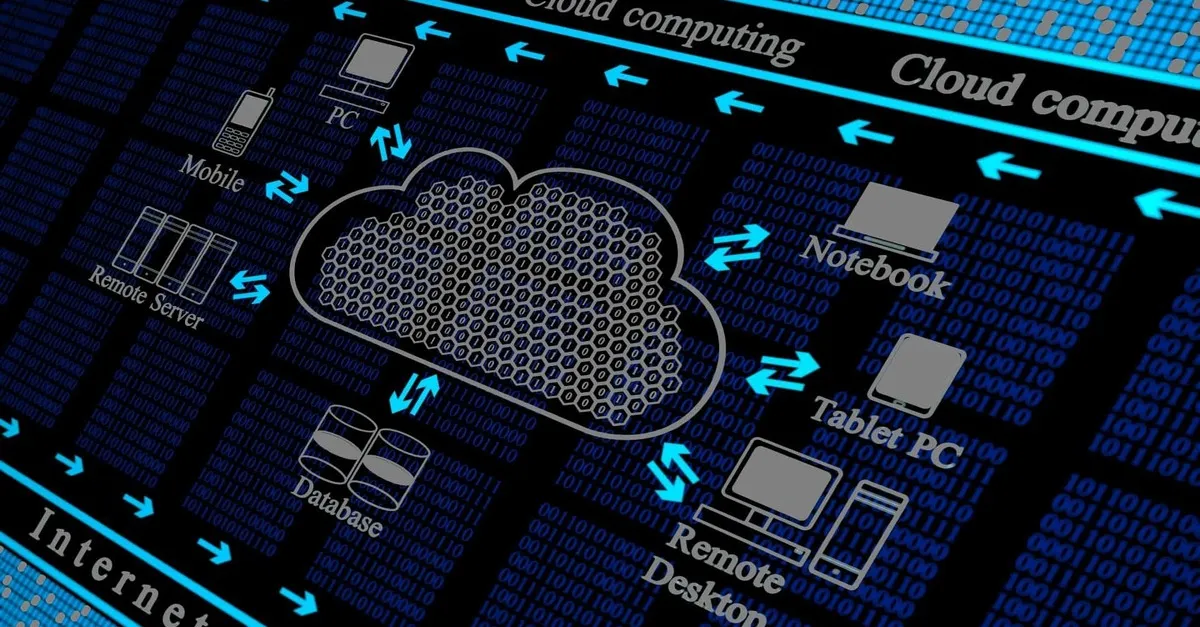
Cloud computing has become very popular amongst businesses. Last year, more than three-quarters of businesses were already using it, and more and more are adopting it every day. If you haven’t considered it yet, it’s probably because you don’t know what you can use it for. To give you some ideas, here are the five main ways it can be used.
Big Data analytics
Today’s businesses collect vast amounts of data on all sorts of things: customers, operational processes, logistics, the condition of machinery, the condition of products and much more. The value of this data lies in making sense of it and using it to solve problems or discover new opportunities. However, this requires big data analysis, which demands the use of significant computing resources, often over a short period of time.
These resources would be incredibly expensive if you had to buy them, and they would remain unused for most of the time. Convincing the finance director that this is the wisest use of the company’s money would be a difficult challenge. The advantage of the cloud is that cloud-based pricing means you can access all the resources when you need them, but you don’t have to pay for them when you don’t need them. This means you can carry out Big Data analysis whenever you need to, but at an affordable price.
File storage
Whilst it is true that you can store your files in many places, what makes the cloud so appealing is that files can be accessed, edited and shared anywhere there is an internet connection, and this opens up numerous opportunities for mobile working, collaboration and even improved security.
What’s more, the cloud provides high-speed, high-availability access, as well as scalability to increase or decrease hosting as required, for which you also pay on a pay-as-you-go basis.
Testing and development
Developing a new application or platform in-house can be a costly and time-consuming process. It involves significant expenditure, time and staff resources, and requires the procurement, installation and configuration of hardware. This means that it takes longer to complete a project, and can put your company at a disadvantage compared to its competitors.
Cloud computing can make testing and development faster, cheaper and less complicated. This is because there are numerous existing cloud environments that are perfectly suited to the task and ready for immediate use.
Disaster recovery
Countless companies use the cloud as a solution for their disaster recovery needs. Continuous server backups in the cloud mean you no longer have to pay for a separate, redundant in-house DR site. Recovery is not only much cheaper, but also much faster, so your business will be back online in no time.
Data backups
Traditional methods of backup were generally complicated and time-consuming, often requiring portable drives or even tapes to be transported to remote locations for storage. This technique can also backfire if the drives are too small for the data or if they turn out to be faulty.
Cloud-based backups are much simpler to implement and more secure. You can schedule backups to suit your needs; store them remotely on virtual servers, safe in the knowledge that if a problem arises with the physical hardware, your data will still be available; and for added security, they can be encrypted and checked to ensure the data remains intact. And, as with all cloud-based hosting solutions, you can use as much hosting as you need without having to worry about running out of space.
The Internet of Things (IoT)
The Internet of Things is beginning to transform our lives, and more and more businesses are taking advantage of it. An IoT system works by collecting data from a large number of connected sensors and using this data to make intelligent decisions, often with the help of artificial intelligence and machine learning.
To reap the benefits of the IoT, you need the cloud, which analyses this data and derives insights from it. An intelligent transport system, for example, is capable of monitoring traffic conditions across an entire area, identifying where problems arise, and, with the help of artificial intelligence, quickly redirecting or slowing down vehicles to prevent congestion. Intervention of this kind would be virtually impossible without the capabilities of the cloud.
The scalability of the cloud is also important for the IoT. As a company grows, so too can the number of IoT devices from which it sends and receives information. More devices mean a greater need for computing resources, and this can be achieved quickly and easily in the cloud, without the need for significant capital investment.
The cloud enables businesses to carry out many tasks that, without it, would be more expensive, overly time-consuming or beyond their in-house IT capabilities. The potential of the cloud is enormous, ranging from basic solutions such as file storage and backup to highly sophisticated processes such as Big Data analytics and IoT data processing. What we’ve discussed here barely scratches the surface, and there is still much more development to come.