 English
 Magyar


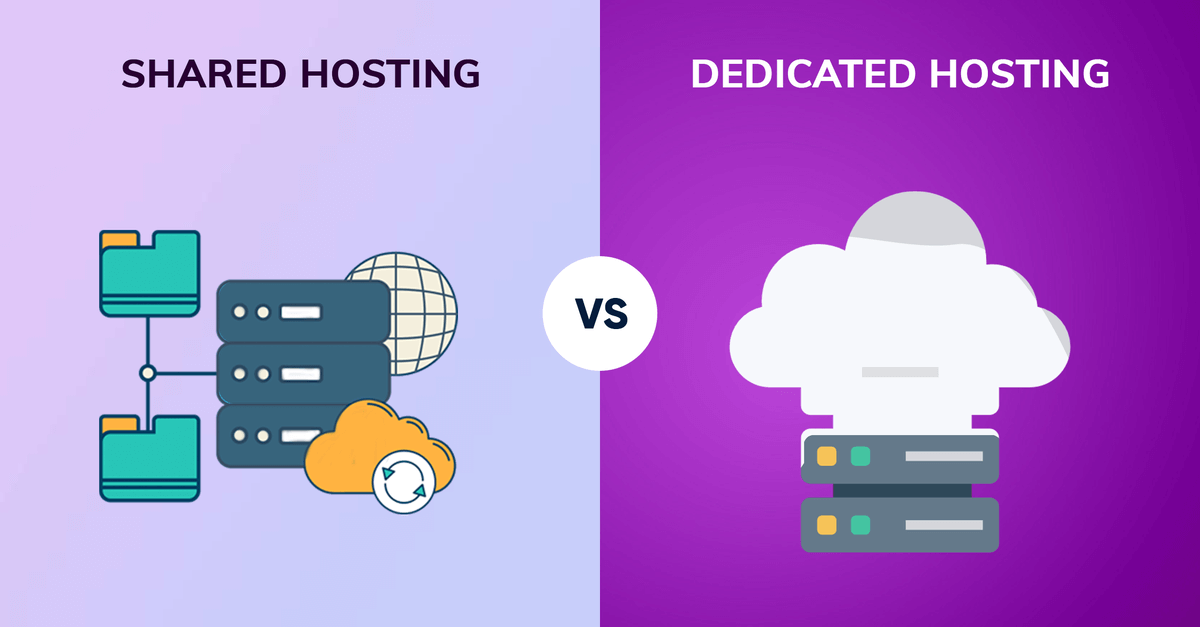
If you’re unsure which web hosting service is best for you, you’ve come to the right place! Given the wide range of options available, even the most technically savvy customers may need some help.
Let’s start with the basics: shared hosting and dedicated hosting. Neither option will suit everyone, so you’ll need to identify your requirements and do your research. Fortunately, we’re here to explore the various options and help you make an informed decision.
In this guide, we’ll take you through a comprehensive overview of shared hosting and dedicated hosting.
Shared web hosting
With shared web hosting, several users share a single physical server and use the same resources. Everyone shares the costs of hosting, bandwidth and other features. Neighbouring websites cannot access other accounts or websites, so the system is secure.
Shared web hosting is a popular choice due to its cost-effectiveness and ease of use. Your web hosting provider sets up the server and installs the necessary software.
All you need to do is upload your website or application. Using the simple control panel, you can create and manage your database, email account and other tools required for your business.
Shared web hosting can be the ideal solution if:
- Your business is small or medium-sized.
- Your traffic is limited to a few hundred visitors per month.
- The content on its website is updated frequently.
- You have absolutely no idea how to configure a server, how to install and update its software, or how to carry out technical maintenance.
Why choose shared hosting?
If you’re new to web hosting, a shared platform is ideal for learning. It’s perfectly suited to businesses and websites with low to medium web traffic that don’t require complex, customised server configurations.
You could think of it as a large house shared by several flatmates. Costs such as food, cleaning products and electricity are shared. If the fridge breaks down, the friendly landlord lives next door. Under the arrangement, everyone saves money and things run smoothly, provided no one drinks straight from the milk carton.
Dedicated web hosting
With dedicated hosting, you are the sole user of the server. The capacity and resources are all yours. This gives you much greater control over the configuration and the overall operating environment. You also have a wider range of services and software to choose from.
Not every business needs all the bells and whistles offered by dedicated hosting. However, it may make sense in the following circumstances:
- Your business is constantly growing and you are continually expanding your range of products and services, so you need the control and flexibility required to customise your server, select the right software and adapt your system to changing requirements.
- Your website contains a significant amount of video streaming and high-resolution photographs.
- Would you like a dedicated IP address that you don’t have to share with other websites?
- Your business handles highly sensitive transactions, which require enhanced security features.
Why choose dedicated hosting?
It is understandable that running a dedicated server entirely on your own costs more than shared hosting. After all, you have a wider range of features and resources to choose from. Unless you have excellent technical skills or strong technical support within your company, you will probably need a hosting plan that includes the set-up and maintenance of the equipment.
These additional features come at a cost, but they are well worth it for customers who need complete control over their operating environment and a little extra security. Furthermore, dedicated hosting may be the better choice if you have a high-traffic, constantly growing website.
Choose the best solution for your website
Shared hosting and dedicated hosting each have their own advantages and disadvantages. On the one hand, shared hosting is an affordable option that is perfectly suited to small and medium-sized businesses. What’s more, you don’t have to worry about configuring the server either.
In contrast, a dedicated server offers excellent performance and gives you complete control over the server’s configuration. It is an excellent choice for larger businesses, high-traffic websites and technically savvy users.