 English
 Magyar


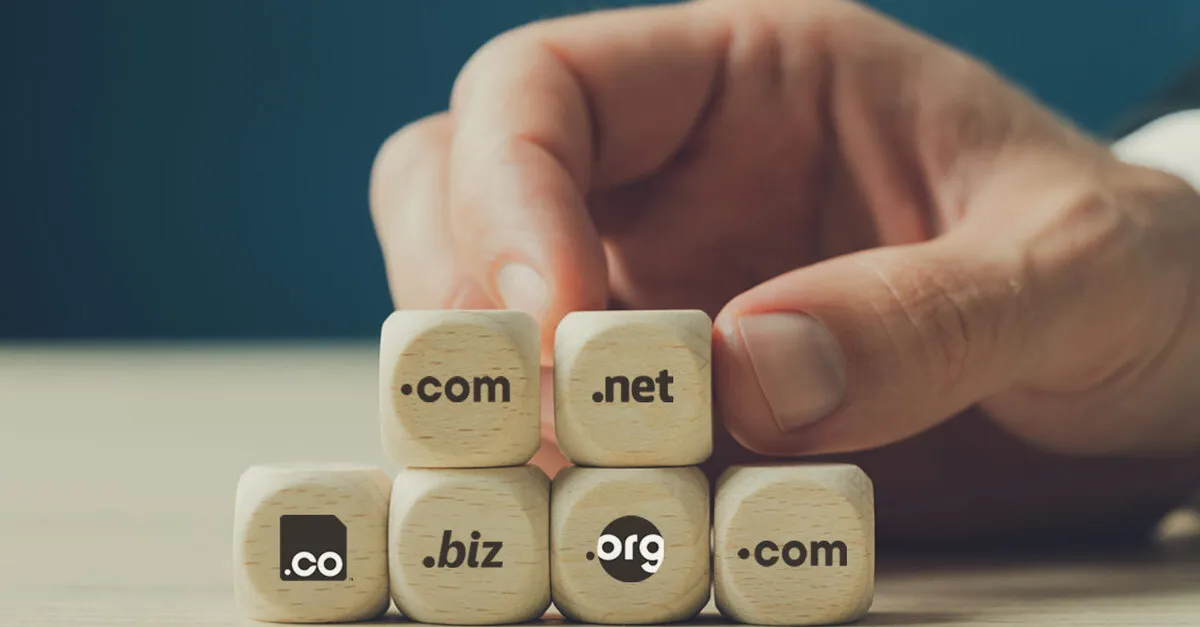
You may have already noticed that every website address consists of two key components. The first part is the domain name, which is unique and captures the name of your brand or business, whilst the second part is the domain extension, which essentially indicates what type of website it is. Domain extensions play a vital role in determining a website’s credibility and help the audience understand the website’s exact purpose. Is it for commercial, informational or some other purpose?
These domain extensions, particularly TLDs (top-level domains), help to categorise websites not only by type, but also by business model and location. Of all the websites on the internet, the most widespread and popular TLDs are .COM, .NET, .ORG, .CO and .BIZ. Together, these account for more than 60 per cent of all TLDs registered worldwide.
With all this in mind, whether you’re choosing domain extensions for your own website, selecting them as a domain reseller, or even advising someone else on which one to choose, you need to know what they mean and what benefits they might offer for a website or your brand. Because each one carries a completely different meaning. To understand each one in detail, it is essential to dig deeper and recognise the differences, so as to highlight their uniqueness and USPs in various situations and scenarios. So, if you’d like to learn the difference between .COM, .NET, .ORG, .CO and .BIZ domains, sit back and read on.
How can you tell the difference between .COM, .NET, .ORG, .CO and .BIZ?
Before we get to the differences, we think it’s important to familiarise yourself with the various TLDs. Whether you’re looking to set up your own website or are a reseller, your customers will ask which one is best suited to their website and will want to know why. In such a situation, it would be important to have your own opinion on these domains, as well as knowledge of web hosting, should you decide to proceed with reseller web hosting plans.
Around 1985, these TLDs were created to serve specific types of websites fulfilling particular roles, with existing and emerging companies and organisations in mind. Here, you can find out more about each of them in detail.
What does .COM mean and who used it?
The .COM domain extension was originally used for commercial websites. Any website that wanted to make money online chose .COM. Today, however, despite the various choices and options available, any website still chooses .COM because it is regarded as the default extension for web addresses. Therefore, if you choose .COM, or recommend it to someone, it is best to do so only if you intend to make money from the website, that is, if the website has commercial purposes.
As the .COM extension is in high demand, there is a chance that your domain name will be taken by someone else. However, if you don’t have a .COM domain, it’s not the end of the world. In fact, it means you have the opportunity to stand out and have a unique web address with a different extension that suits your category.
What does .NET mean and who used it?
The .NET domain extension stands for ‘network’ and was originally intended for brands to use for various portals under their umbrella. So, if a business or brand had purchased a .COM domain, it would have opted for .NET to discuss internal matters. For example, conglomerates such as AT&T would use .COM for their official website and .NET for smaller sites and portals. Ideally, you should choose .NET if your business offers services or products such as internet access, web hosting, databases or even collaboration tools.
When using or recommending a .NET domain, you must be very careful to ensure that there is no similar domain name under .COM or another TLD. This is particularly true for .COM domains, as people tend to associate a website with them. An effective way to do this is to brand your website with the .NET TLD. This helps to cement the name of your business and/or website in the minds of your audience.
What is a .ORG domain and who can use it?
The .ORG domain extension stands for ‘organisations’ and was primarily used by non-profit organisations. Any institution that did not offer commercial services chose .ORG to indicate that it was a non-profit organisation. For a time, the .ORG extension was available exclusively to non-profit organisations, but this restriction was lifted in 2019 after the registry was sold to an investment firm.
Although for-profit organisations can also use the .ORG domain name extension, people tend to associate it mainly with non-profit organisations and institutions, as the domain name has been well-known for a long time.
What is .CO and who can use it?
The .CO domain, which was originally a ccTLD reserved for Colombia, took on a completely different meaning after it was opened up to everyone in 2010. Today, almost anyone with a business or website, or an organisation running a parallel online community, uses a .CO domain.
Nowadays, many marketers and businesses are turning to community building to better understand their customers and actively engage with them online. A community serves the sole purpose of bringing people together with a shared goal: to improve their experiences with a brand or a cause they believe in. The .CO domain extension makes it easier for community websites to carry out this activity.
What is .BIZ and how is it useful?
The .BIZ domain emerged as a fantastic and cheaper alternative when a particular domain name was unavailable under the .COM domain. Today, however, many start-ups prefer it for the simple reason that it is cheaper and has low renewal costs. For anyone starting a new business, the .BIZ domain is the perfect way to show that you are a business and are here to do business.
Taking all these factors into account makes it much easier to work out which TLD to choose and when. What’s more, you now know which domains can help you if you want to brand your products or your business. If you’re looking to build both a business and a community, .COM and .CO would be a great combination for you.
In conclusion
We believe that whichever TLD you choose, it should be suited to your category and the audience you’ll be targeting through your website. After all, people remember the name of a website and share it if they’ve had a good experience with it. So why shouldn’t a fantastic domain name and domain extension be your top priority?
If you enjoyed reading this article, please share it with your colleagues, or if you have any feedback for us, please feel free to reply in the comments section below. We would be delighted to hear from you. We hope you now understand the difference between .COM, .NET, .ORG, .CO and .BIZ.