 English
 Magyar



Unlike other Linux distributions, Red Hat Enterprise Linux is not entirely free. However, you can still enjoy its benefits by installing these free RHEL-based Linux distributions.
Red Hat had become the world’s largest open-source company before it was acquired by IBM, and Red Hat Enterprise Linux is the company’s flagship product. This Linux-based operating system demonstrated just how much money a company can make by developing free software and supporting it through paid support contracts.
As the name suggests, Red Hat Enterprise Linux is intended for businesses and organisations. If you want to run your own personal server, Red Hat Enterprise Linux could be a solution, as nowadays virtually anyone can obtain 16 free licences through the Red Hat Developer program. However, this may not necessarily be the best option for us, but fortunately there are numerous alternatives that use exactly the same code and can run the same applications as RHEL.
Rocky Linux
Rocky Linux is a free and open-source fork of CentOS 8, which is fully compatible with the binary version of Red Hat Enterprise Linux (RHEL). It was developed by the Rocky Linux Foundation under the leadership of Gregory Kurtzer, one of the co-founders of the CentOS project. The name ‘Rocky’ pays tribute to the late CentOS co-founder Rocky McGaugh.
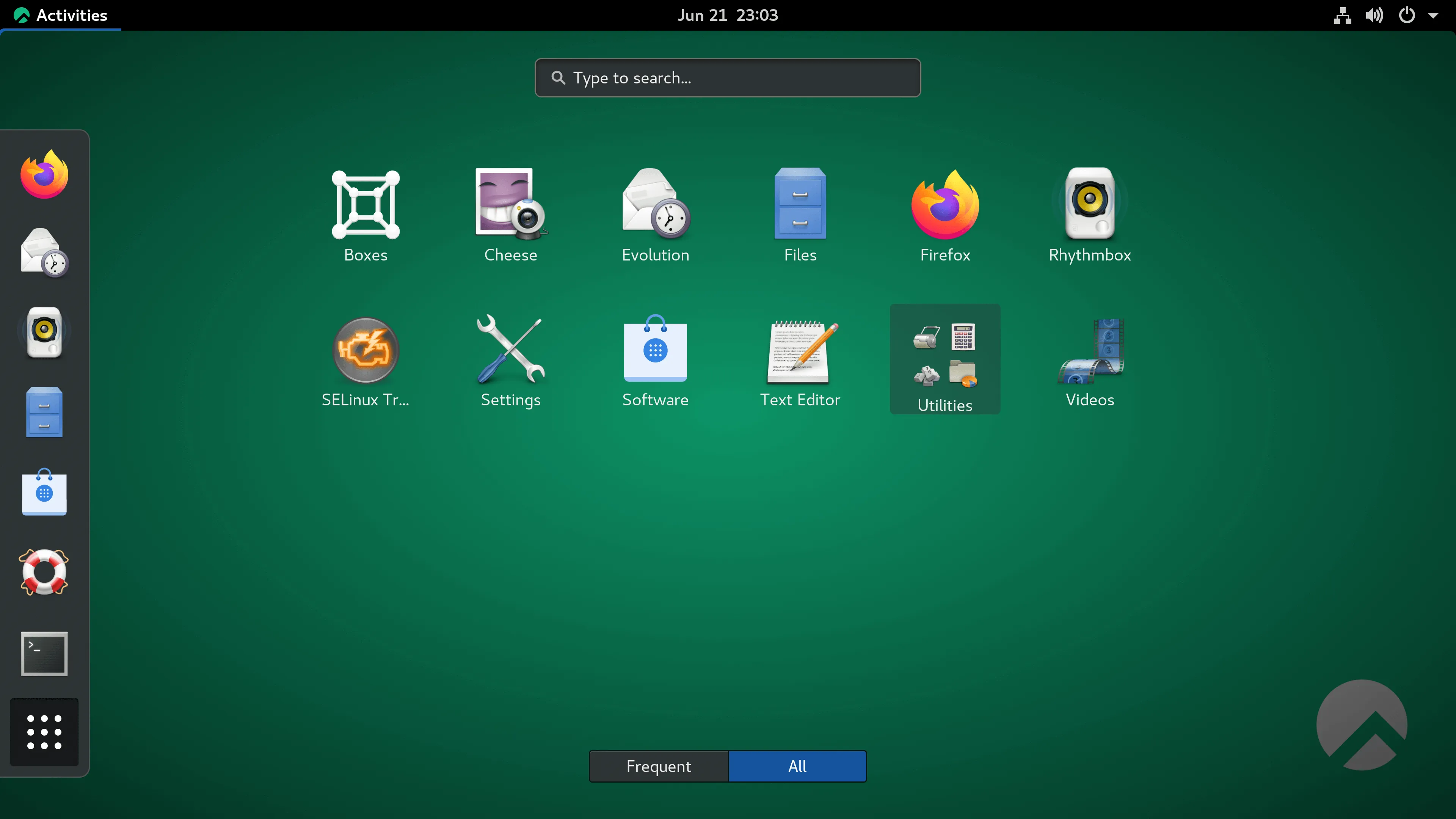
Rocky Linux was developed to fill the gap left by CentOS 8 after the CentOS project shifted its focus to CentOS Stream, which is a continuously updated release. Rocky Linux will now serve as a downstream release, just as CentOS did previously. CentOS Stream will now function as an upstream release and serve as a preview of changes to be incorporated into future RHEL releases.
Rocky Linux is free and entirely community-supported, and you can now receive free community support via Rocky Linux Mattermost and the online forums.
AlmaLinux
AlmaLinux is also an alternative to CentOS 8. It is also 1:1 binary-compatible with Red Hat Linux, and was originally developed and released by the CloudLinux team to fill the gap left by the sudden discontinuation of CentOS 8. It is completely free and open-source, and is currently developed by the community through the AlmaLinux Foundation.
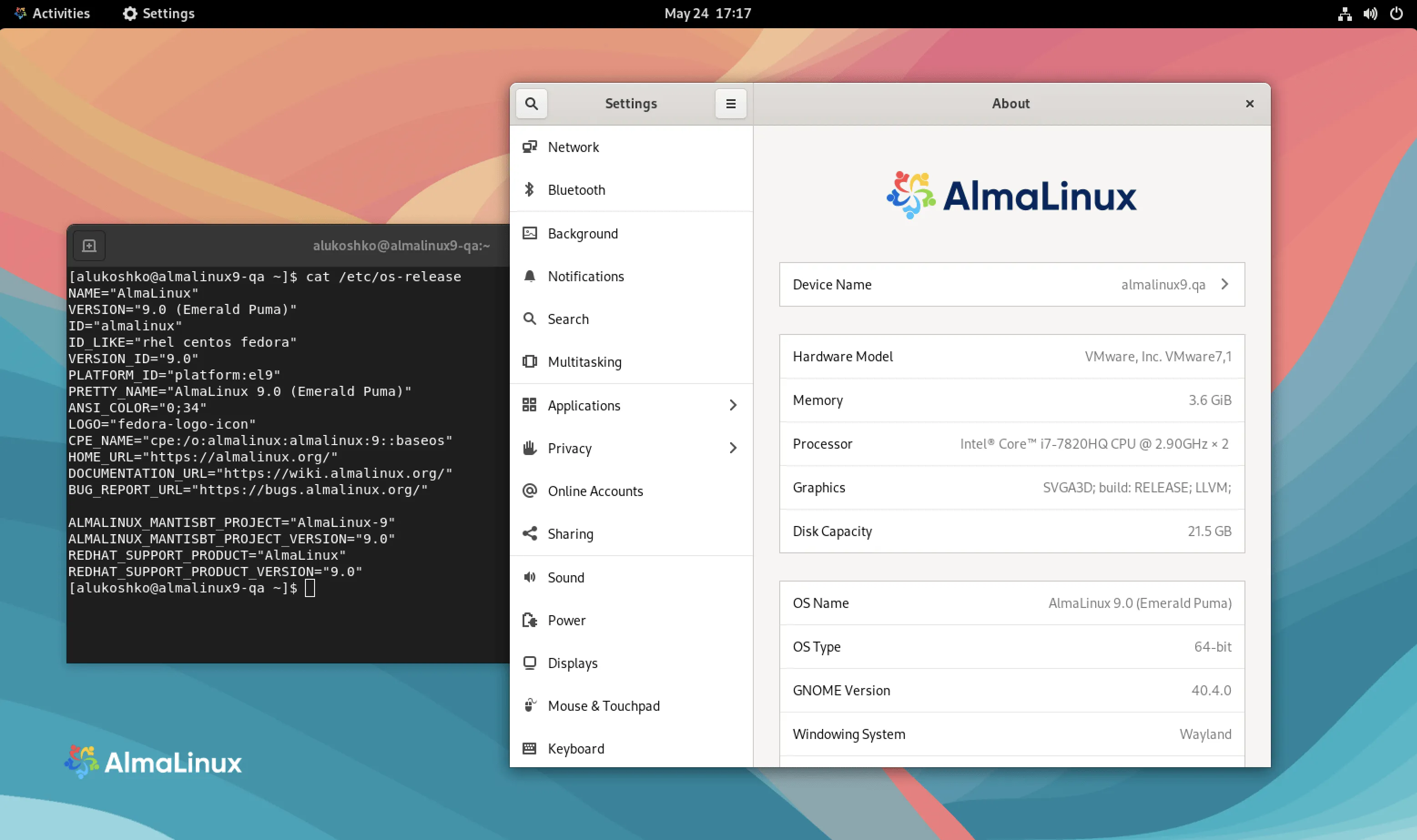
Like Rocky Linux, AlmaLinux also focuses on providing an enterprise-grade platform that can be deployed in data centres or in the cloud for production workloads.
AlmaLinux enjoys active community support on Reddit, through community forums, the official community chat and the Discourse community group. You can also visit the AlmaLinux GitHub page, where you can access the AlmaLinux source code.
CentOS
CentOS, built around the Red Hat architecture, is a free and open-source, community-developed Linux distribution that provides an enterprise-grade computing platform. First released in 2004, CentOS is an excellent free alternative to the enterprise RHEL operating system. It is recommended for users or small businesses wishing to set up a server for file sharing, web hosting and other enterprise-level tasks.
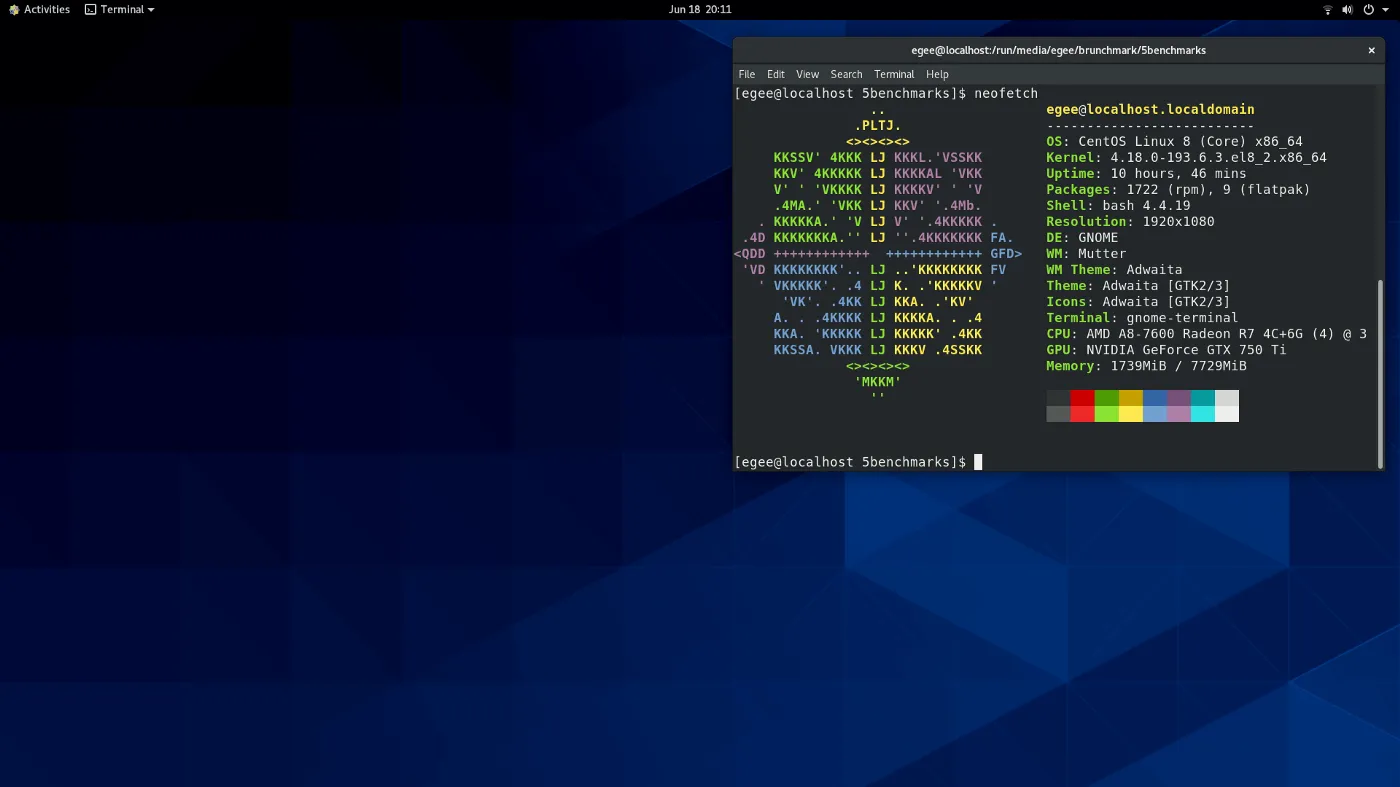
Although it does not come with the commercial support offered by RHEL, CentOS is well known for its rock-solid stability, enterprise-grade security and other advantages, thanks to its binary compatibility with RHEL. As such, it is an excellent choice for a web server. In fact, CentOS is a particularly popular choice in the web hosting industry due to its stability and the provision of outstanding WHM/cPanel control panels, which allow users to manage their domains.
CentOS is generally recommended for advanced users, given its steep learning curve, in contrast to distributions such as Ubuntu, which make it easier for beginners to manage software packages. A vibrant community and numerous forums are on hand to help users if they get stuck. However, there is less hand-holding, as it is assumed that users are at an intermediate or advanced level. Be that as it may, desktop enthusiasts can still download and install a CentOS image, which provides a GUI-based desktop, mostly based on the GNOME environment.
It is worth mentioning CentOS Stream, which is a rolling-release version of CentOS that provides the latest software packages. It is mainly used for research and testing, and is not recommended for production environments due to stability issues.
Fedora
Fedora is the upstream community distribution of Red Hat Linux. It is a general-purpose distribution developed and maintained by the Fedora Project, which is sponsored by Red Hat. It has a huge community and is primarily used by developers as a hub for developing and testing software packages before they become available for RHEL or CentOS.
In fact, Fedora is regarded as a cutting-edge distribution, as it always releases the latest software packages, drivers and utilities. So if you opt for Fedora, you can be sure you’ll end up with the very latest software versions.
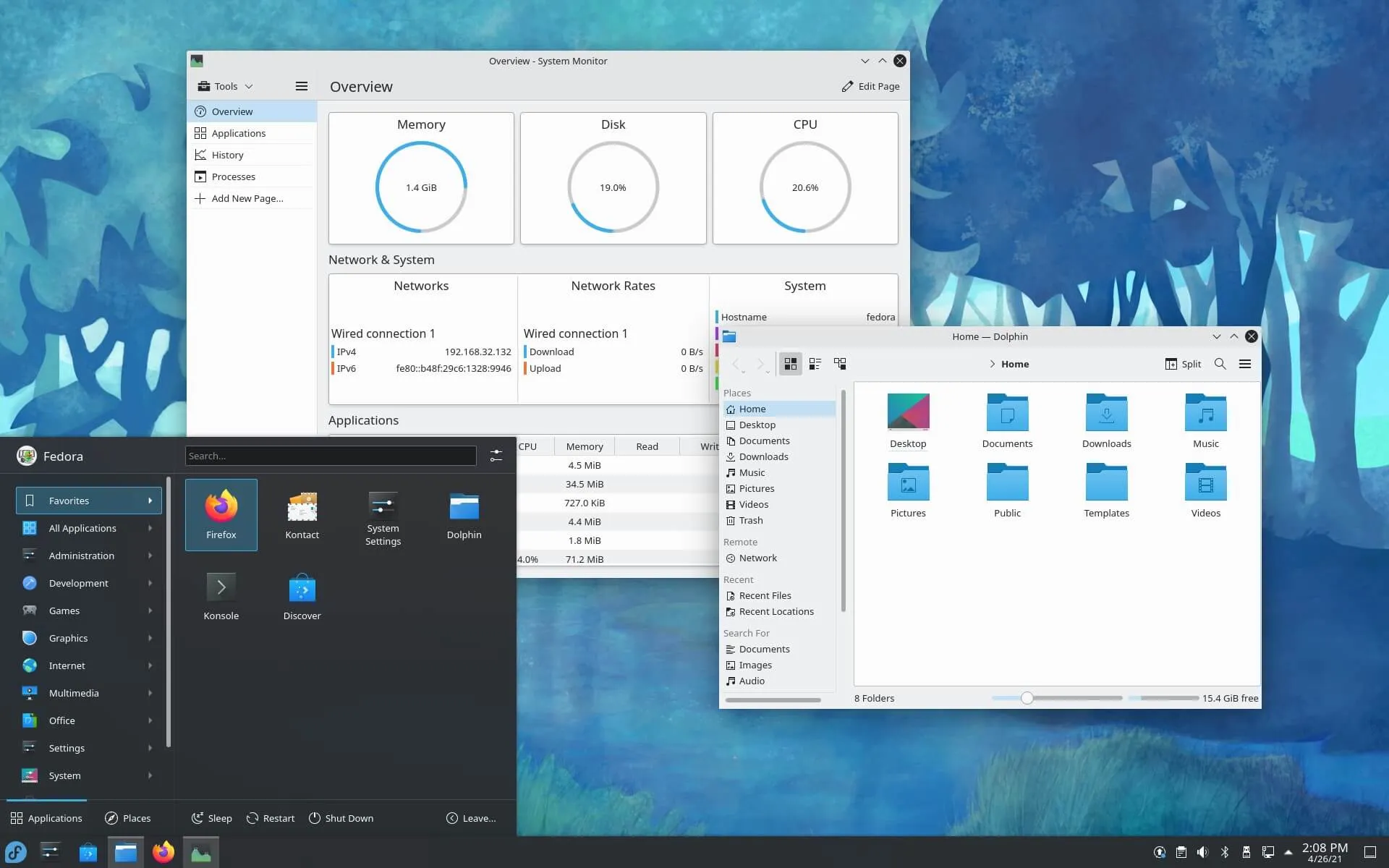
Fedora is well known for being easy to use and highly customisable. It has a simple user interface and includes ready-to-use applications suitable for everyday use. This makes it popular amongst beginners who want to try out a Red Hat-based distribution.
Fedora also treats security as a top priority and, in fact, comes with SELinux (Security-Enhanced Linux), a kernel security module that manages access rights. It goes one step further and includes a firewall, which is enabled by default.
Fedora comes in three main editions, each with a wide variety of applications: Fedora Workstation for desktop and home users, Fedora Server and Fedora IoT for IoT ecosystems, such as the Raspberry Pi.
Oracle Linux
Oracle Linux is an enterprise-grade operating system that is 100 per cent compatible with Red Hat Enterprise Linux. It combines the stability and enterprise-grade security of RHEL with the flexibility and enhanced security of Oracle’s development team, offering a formidable and robust, low-cost enterprise option.
Oracle Linux can be downloaded free of charge, with no subscription fees, and all security updates and patches are provided free of charge. Perhaps the only cost is support, which is significantly lower than that of Red Hat Enterprise Linux. What’s more, Oracle Linux offers more support options than RHEL. Worthy of mention is the Ksplice zero-downtime patching service, which helps to update the system with critical updates without having to restart the server.
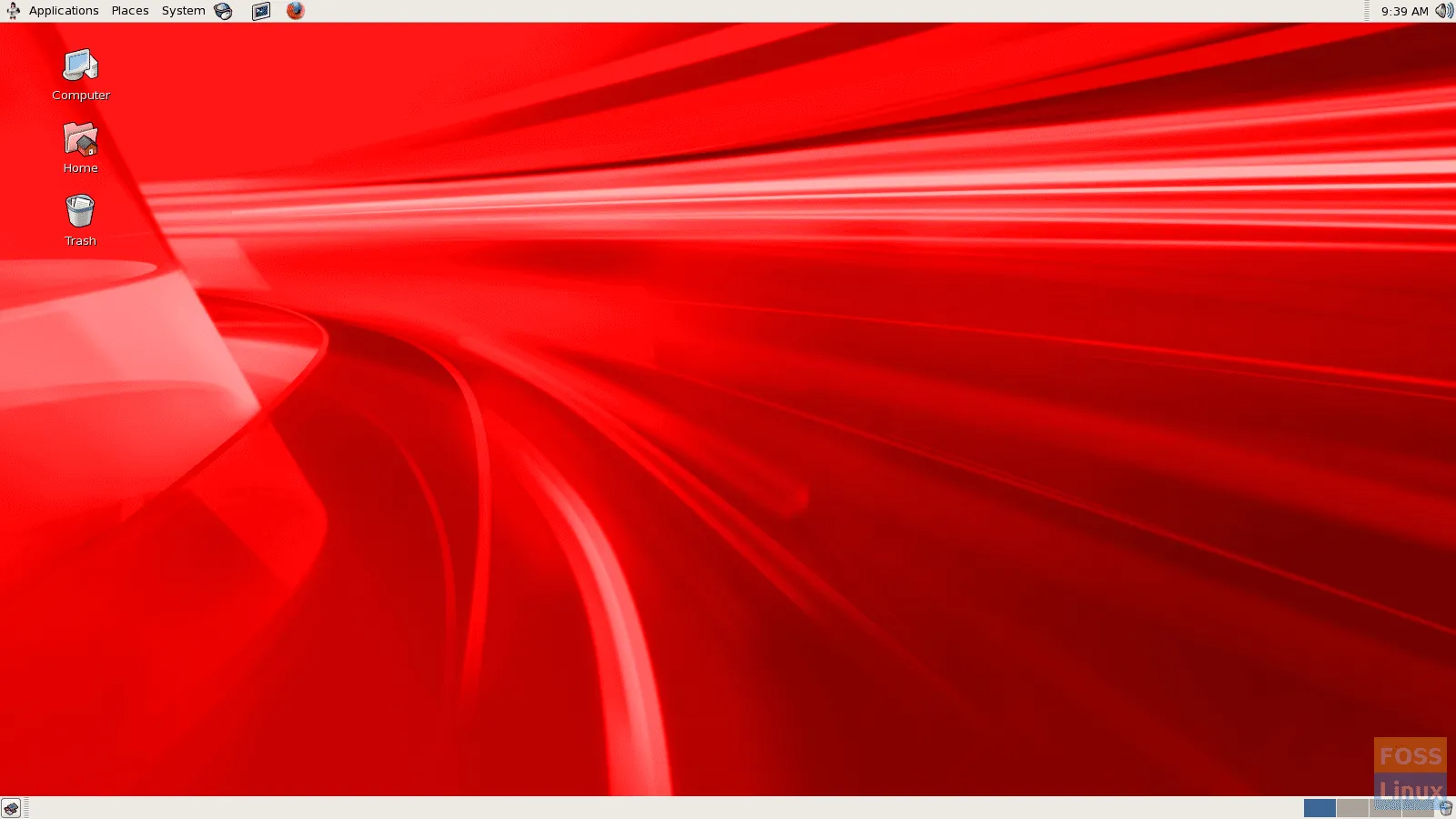
As far as usability is concerned, Oracle Linux is extremely easy to set up and easier for users unfamiliar with Linux to learn. This is because most of the necessary packages are pre-installed by default and can be enabled during installation.
Thanks to the built-in integrations and optimisations developed by the Oracle team, Oracle Linux is the perfect choice for companies running Oracle systems, such as Oracle databases. It goes without saying that Oracle Cloud runs on Oracle Linux.
Compared to Red Hat Enterprise Linux, Oracle Linux offers a more flexible and secure option for businesses using Oracle solutions or planning to migrate to them.
ClearOS
A common challenge facing many small businesses is the complexity of installation. Linux has made huge strides in providing easy-to-use and user-friendly distributions. However, finding an affordable data centre solution remains quite a challenge. If you’re looking for a server operating system that utilises the open-source model to provide a low-cost and streamlined IT experience for small businesses, then ClearOS is one option you might consider.
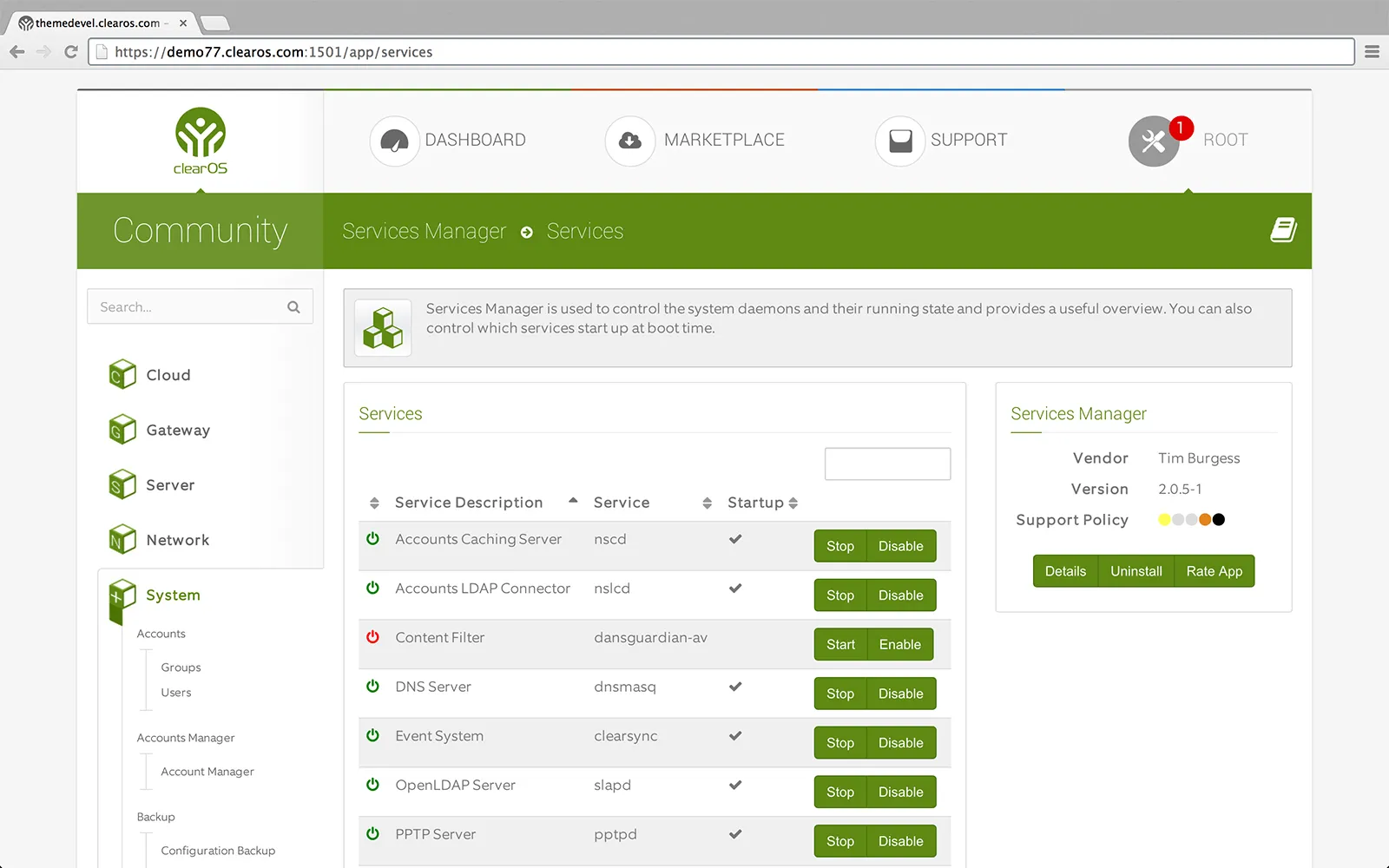
ClearOS is described as a simple, secure and affordable operating system based on both CentOS and RHEL (Red Hat Enterprise Linux). It offers an intuitive web interface and an app store with over 100 applications to choose from.
ClearOS 3 is available in three main editions: Home, Business and Community Edition. The Home Edition is ideal for small offices. The Business Edition is designed for small and medium-sized enterprises that prefer the benefits of paid support, whilst the Community Edition is completely free.
AlmaLinux and Rocky Linux are also available as operating systems on our KVM VPS servers.