 English
 Magyar


A domain name is an essential requirement for launching a website. It plays just as important a role in this as, for example, web hosting or the installation and professional use of a suitable content management system.
What do you need to know about domain names in general? Below, we’ve compiled and answered the most important questions for your information, and we’ll even offer a little help in choosing the right domain name.
What is a domain name?
A domain is, in essence, the name, address and unique identifier of our future or existing website, which allows us to simply type an easy-to-remember name into the browser – rather than a complicated IP address – to view the pages that are relevant to us.
It serves many purposes; it can even form part of your marketing strategy, making it easier for people to recognise your business, whilst the domain extensions can even indicate which country a particular website originates from. You can register a domain name through registrars, but when purchasing web hosting, it is often included automatically.
The structure of a domain name
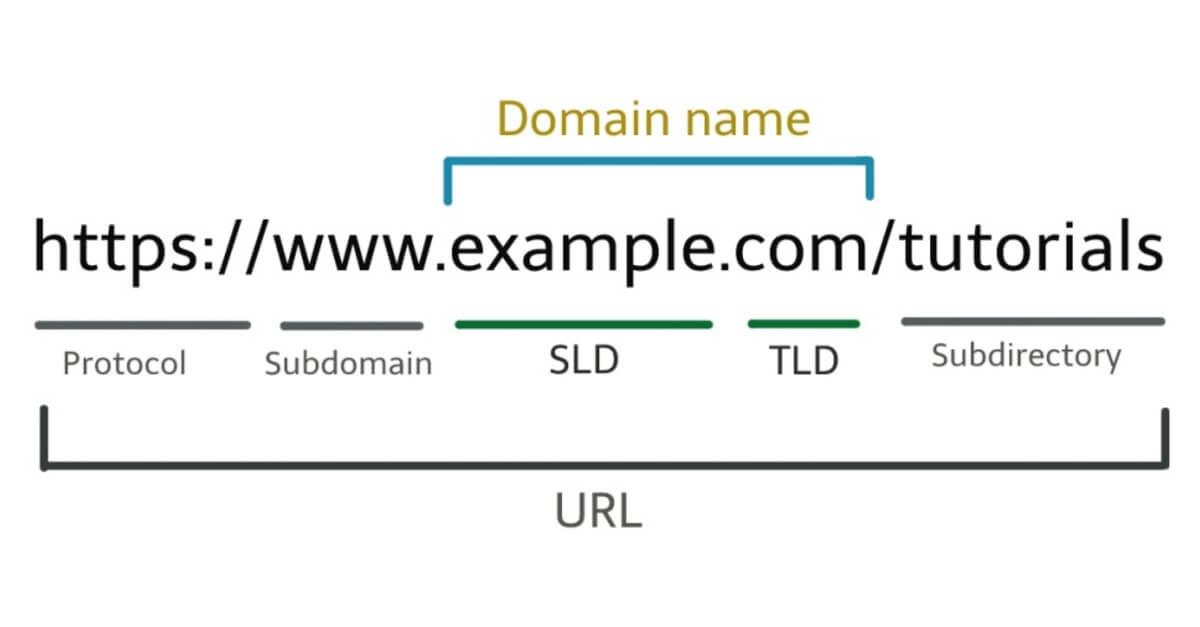
A domain name essentially consists of four key elements.
- The first is the protocol, which for a secure website will be https://.
- The second is the ‘www’ prefix, which is part of the subdomain and can now often be omitted entirely.
- The third part is the domain name itself, which comes between ‘www.’ and ‘.hu’ or any other extension.
- The fourth and final element is the TLD, or top-level domain, which is the extension mentioned above.
Useful tips for choosing a domain name
Now that we know what a domain name is, where to get one and how it is structured, it’s time to choose the right one. To help with this, here are some useful and practical tips:
Make it unique, but not too long
The secret to a successful domain name is to make it as unique as possible; if the aim is to build a brand, it should include the company name in some form and describe what we do, whilst not being too long – no more than 8–10 characters.
It’s best to forget about domain names that include keywords. These used to be very important from an SEO perspective, but nowadays Google doesn’t really take them into account anymore, not even for local search optimisation.
No accents, no names that are difficult to spell
Although it is now possible to use accented domain names in Hungary, this should be avoided for a number of reasons. This is particularly true if you are looking to expand into foreign markets, as the spelling of such names can cause serious problems abroad.
What’s more, as the aim for decades has been to avoid accents, everyone here has become accustomed to this. As well as avoiding accents, we should also ensure that the domain name is easy to spell and does not contain any elements where the spelling differs from the pronunciation.
You also need to pay attention to the extensions
If you want to launch a website in Hungary and reach a Hungarian audience, using the .hu extension is the right choice. However, if you plan to expand abroad in the future, it is advisable to think ahead and opt for the .eu or .com extensions.
One domain isn’t always enough
Last but not least, if there is a larger or growing business behind the website, you should not leave the future to chance, and it is advisable to purchase several domain names at once.
This is particularly important, for example, if we wish to prevent competitors from launching a website under a domain name similar to ours in the future. It is therefore worth registering several extensions – at least .eu and .com – as well as the accented version, if this is relevant to our domain name.